INTORDUCTION
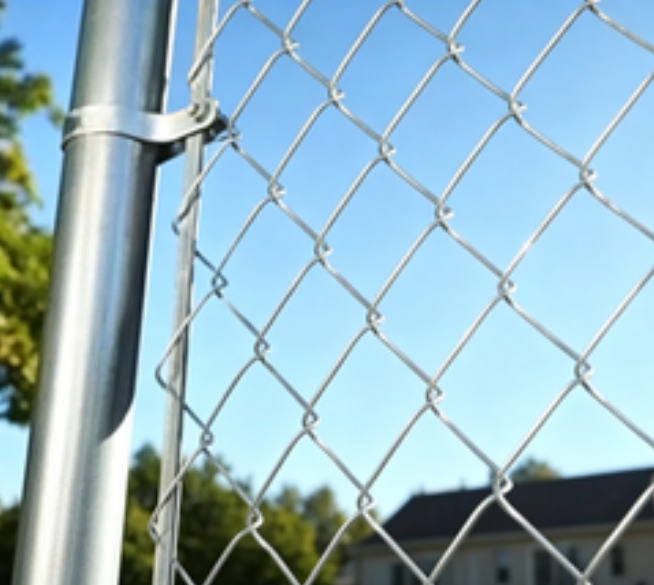
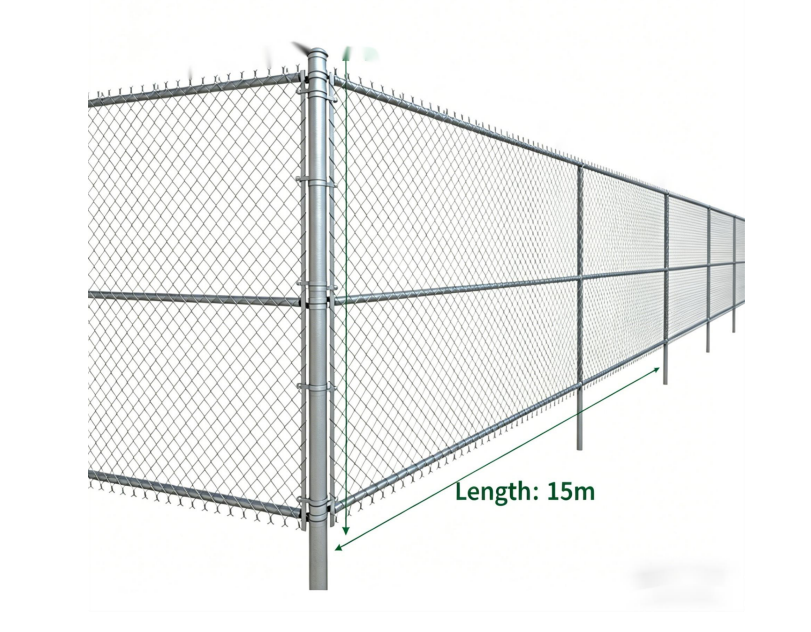
Chain link fence, also known as Hook mesh guardrails, are perimeter protection systems that combine flexibility with robust strength. Their distinctive diamond-shaped woven structure gives the mesh excellent elasticity and impact resistance—even if locally deformed by force, the mesh won't easily unravel, while maintaining clear visibility and good air circulation. With hot-dip galvanized or PVC-coated surface treatments, they deliver outstanding rust and corrosion resistance, able to withstand long-term exposure to harsh outdoor conditions. From secure enclosure of residential yards, boundary separation of school playgrounds, protective netting for sports stadiums, to high-security perimeters of industrial plants, hook mesh guardrails have become the ideal protection choice for various scenarios with their low maintenance costs and wide applicability.
COLOR AVAILABLE
POPULAR COLOR IN MARKET
WELDED FENCE COLOR AVAILABLE

APPLICATION
Industrial Facility Security
High-tensile strength resists impact; corrosion resistance suits outdoor use; open mesh enables surveillance and airflow.
 |
 |
 |
 |
| Highway & Railway Fencing Adaptable to sloped terrain; customizable height and mesh size; cost-effective for long-distance installation. |
Residential Yard & Garden Fencing Maintains visibility and light transmission; PVC coating offers color options; low maintenance. |
School & Playground Enclosures Stable structure with no sharp edges; open mesh allows adult supervision; budget-friendly for public facilities. |
Sports Field Perimeter Fencing High strength resists impacts; good ventilation; customizable height to contain balls. Animal Enclosures & Farm Use Adjustable mesh size for different animals; corrosion-resistant against waste; stable structure; high cost-effectiveness. |
Knuckled at both selvages
Knuckled at one selvage, twisted at the other
Twisted at both selvages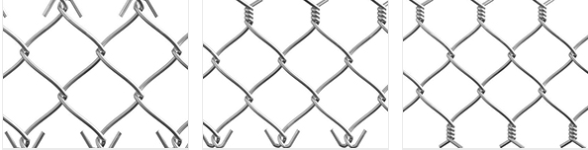
C WIRE THICKNESS: 2.5-4.0mm
D MESH SIZE: 25*25MM / 40*40MM/ 50*50MM /50*50mm/ 60*60mm / 70*70mm
E POST:round post 2INCH/3 INCH/4INCH
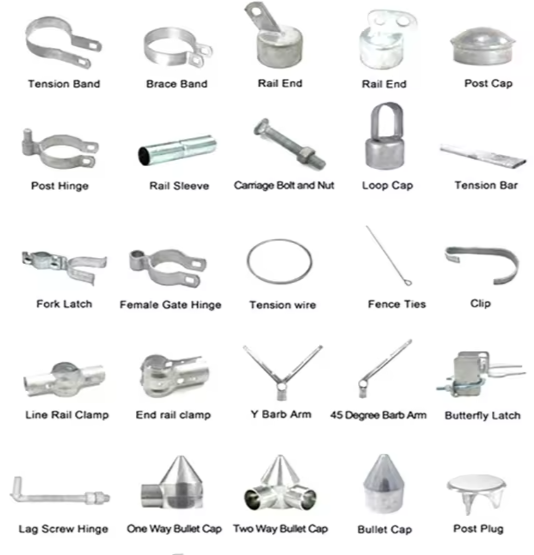
F FITTINGS
SURFACE TREATMENT(ANTI-RUST TREATMENT):
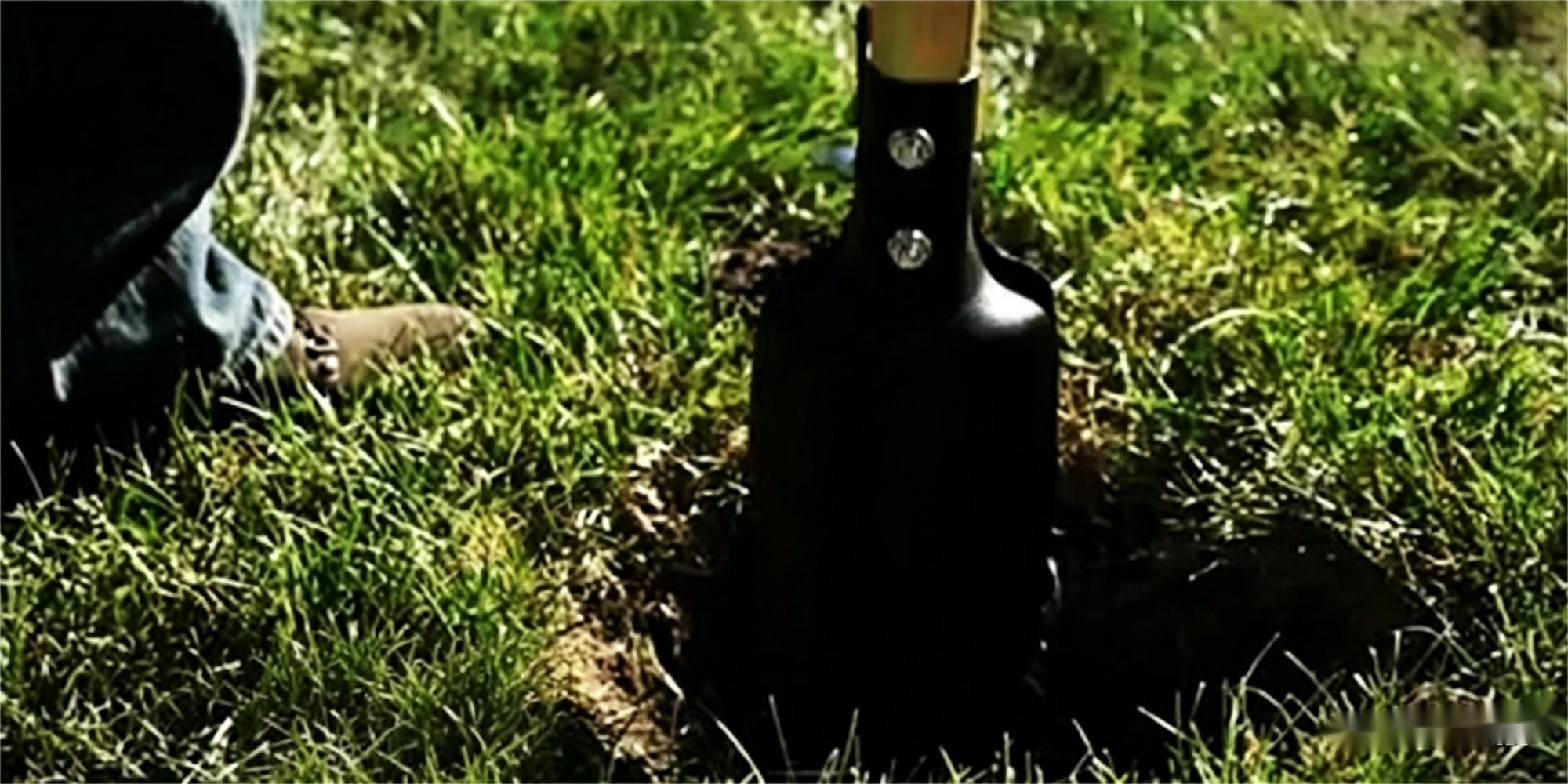
DIG THE POST HOLES
STEP 1:Fill corner, gate and end postholes with concrete. Check and adjust post plumb regularly during placement. Slope concrete tops for water drainage away from posts. Allow concrete to cure for 2–3 days. Do not concrete or set line posts.
STEP 2:
Install Tension Bands & Hardware
Slide tension bands onto each corner, and end post (use 3 for 4' fence, 4 for 5', 5 for 6'). These secure the mesh after installation.
Attach hinges and latch hardware to gate posts at approximate final positions for later installation.
Use a rubber mallet to drive end post caps onto gate, corner, and end posts, then slip a brace band over each installed post.

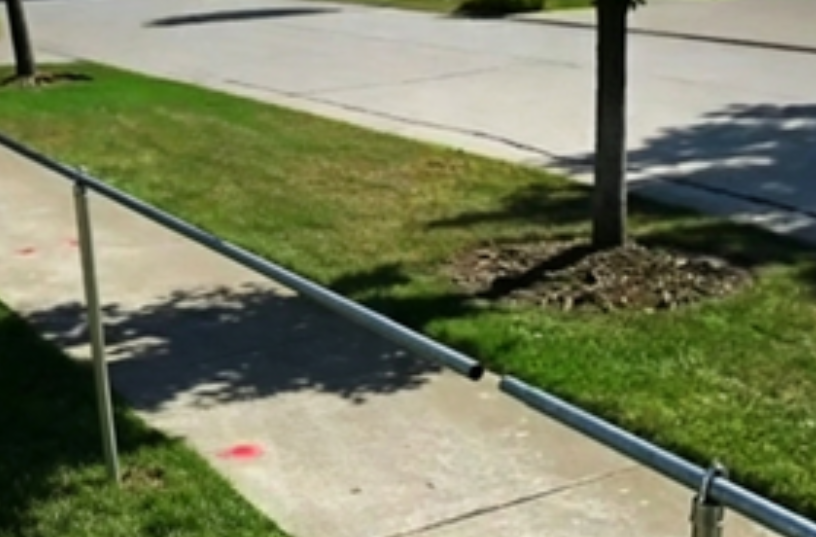
STEP 3:Attach the Rails
Insert rails into rail caps and adjust caps to final mesh height (allow 2 in. ground clearance).
Tighten brace bands.
Backfill line post holes with soil and tamp until compacted.
STEP 4:
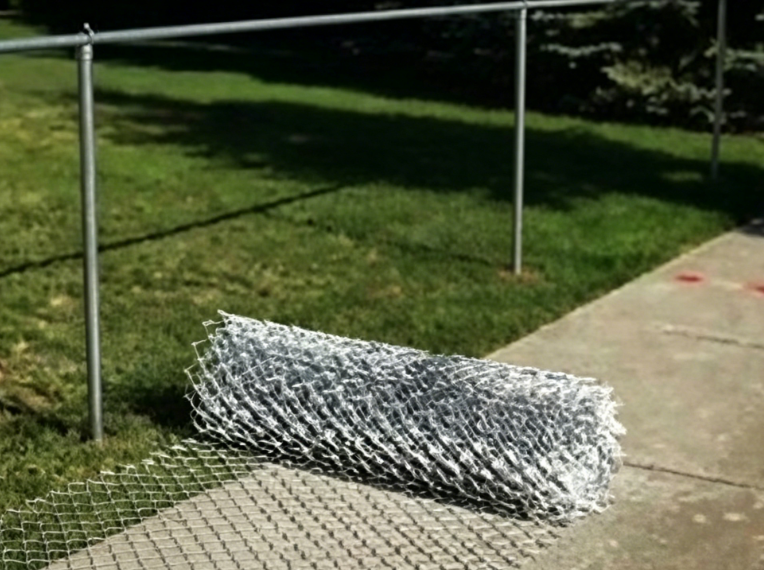
Lay Mesh & Insert Tension Bar
Lay the chain link mesh flat on the ground outside the fence line. Insert a tension bar through the mesh links at the end of the mesh. This bar rigidifies the fence end and provides an attachment point to the post.
Step 5:
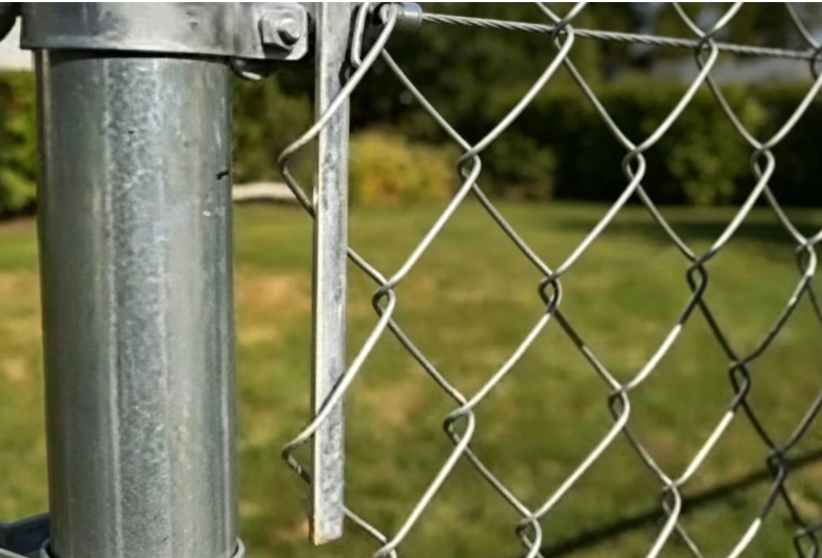
Attach Tension Bar to Posts
With assistance, lift the mesh into vertical position.
Secure the tension bar to the tension bands on an end post using a socket wrench.
Position the mesh with a 1–2 inch overlap over the rail and 2 inches above ground.
STEP 6:
After Step-by-Step with above guides
Stretch the Mesh
Tension the mesh to prevent sagging using a fence puller
Note the tension bar position
Insert a pull bar through the loose mesh several feet from the end post
To keep fence Durable